Each year, students from Bedford High School take the short walk down the road to our headquarters campus to tour our marine biology lab. It’s always an exciting day as our folks get to talk about what they love about their careers and share it with others. And it’s especially fun to see the students’ reactions to different specimens and field stories and answer their questions.
This visit is important as it gives us the unique opportunity to show students how future science degrees can be put into action. We also hope the visit sparks curiosity and maybe even a sense of stewardship among the younger generation.
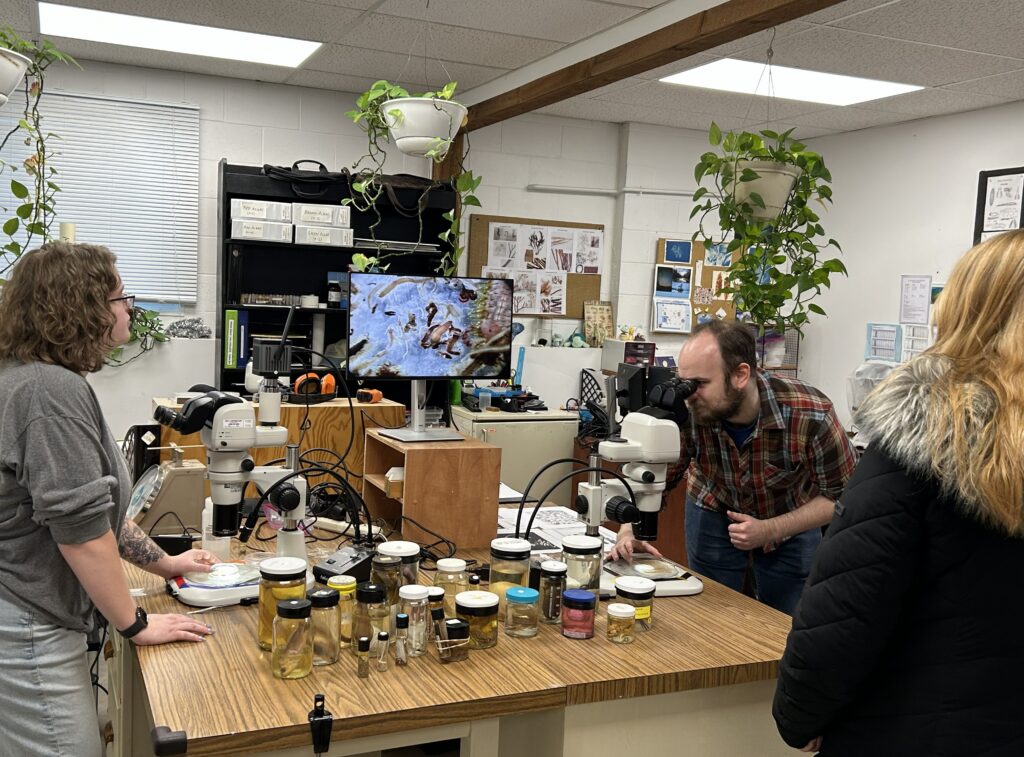
This year’s visit was particularly exciting as in addition to our lab staff, we had representation from our Fisheries and Wetlands departments. Staff were broken up into five different stations for students to visit:
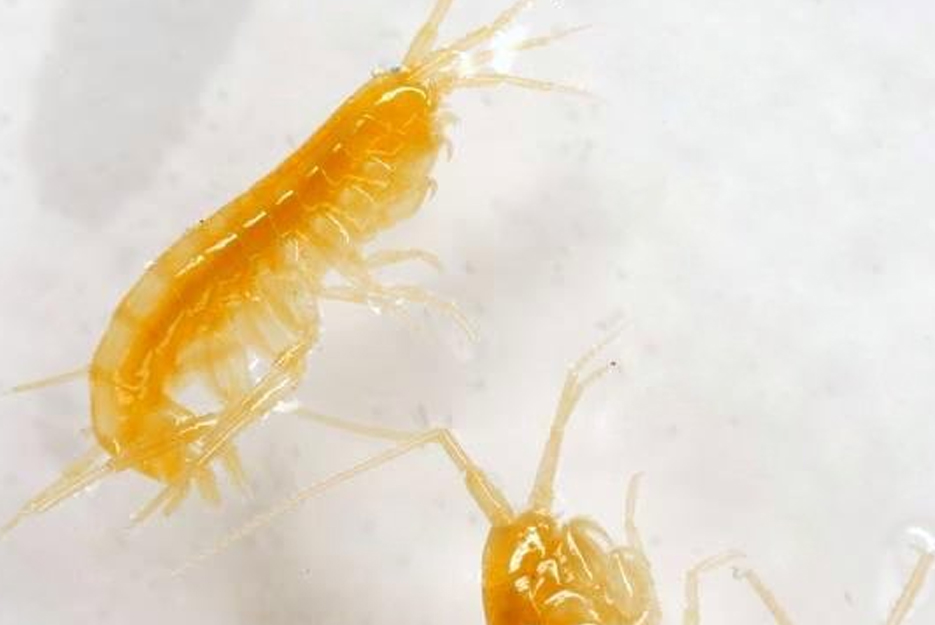
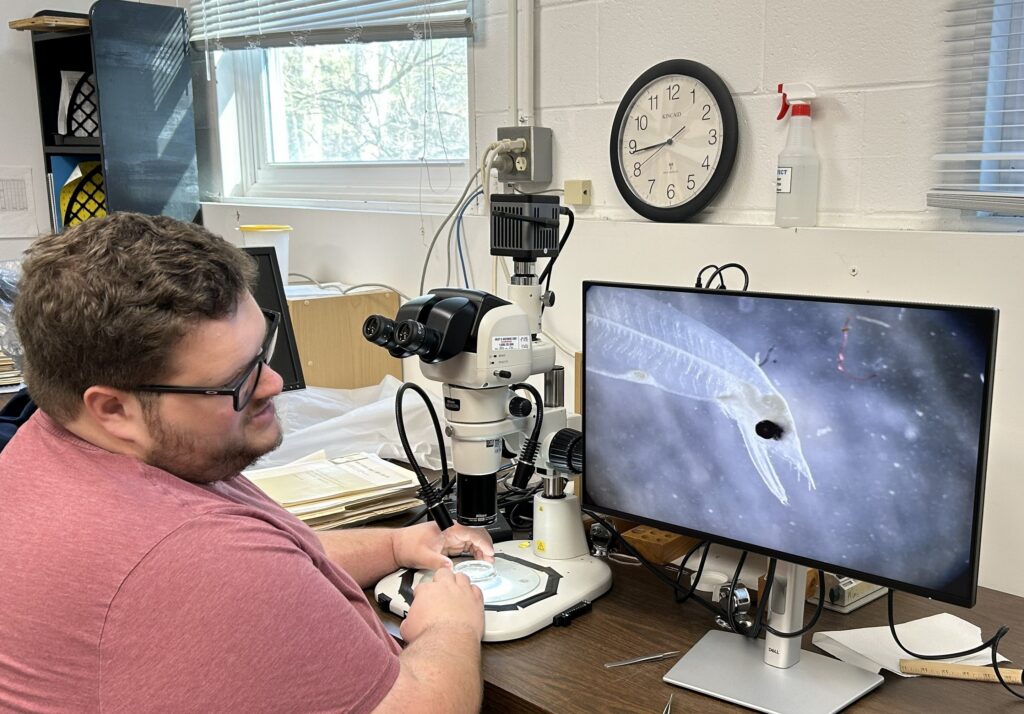
- Benthic Sample Sorting: Two of our talented aquatic taxonomists showed students samples of different benthic creatures through microscopes and monitors and explained some of the nuances of sorting such small, but fascinating creatures. Students didn’t just look at ‘bugs’; they learned how these tiny creatures act as biological indicators. Because benthic life is stationary, their presence or absence tells our taxonomists a story about water quality and long-term environmental stability. Seeing a rare species under the microscope isn’t just a “cool find”—it’s data that helps our clients better understand local aquatic environments.
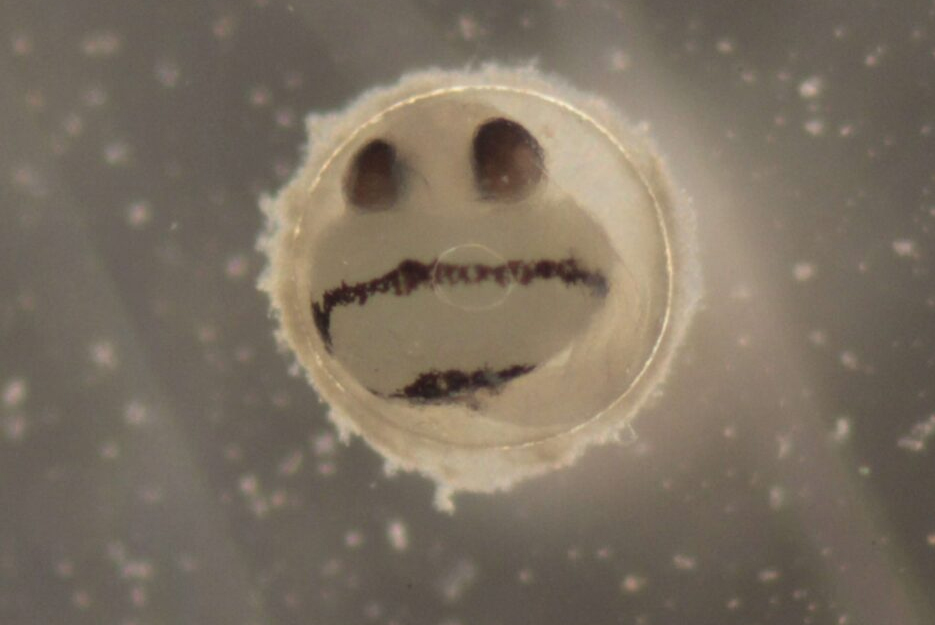
- Fish and Invertebrate Identification: Two more of our aquatic taxonomists led students through the fascinating world of “the small and the plenty.” This station focused on the identification of fish, molluscs, and the microscopic engines of the ocean: macrozooplankton and copepods. Using high-powered magnification, students got a literal “up-close” look at the intricate anatomy of the leptocephalus (flat, clear, larva) stage of an eel. Our staff explained that while the specimens they ID might be small, they are the backbone of marine life; without healthy populations of these tiny invertebrates, our larger fish and marine mammals couldn’t survive.
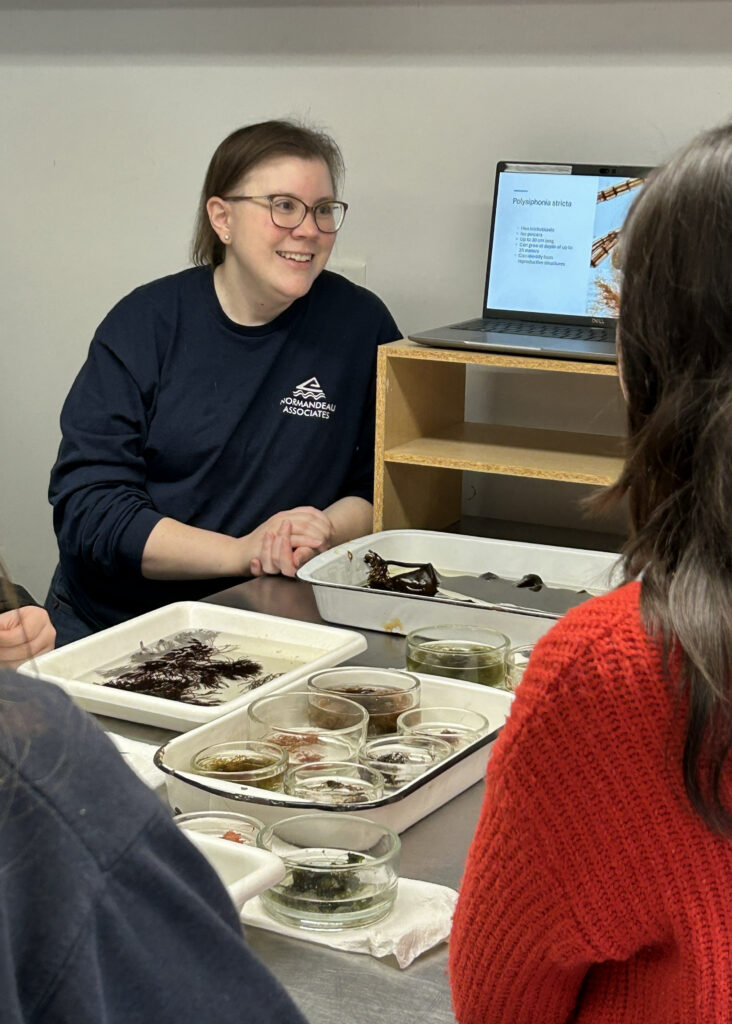
- Ocean Algae: Our algae specialist was on site to show students different types of algae, the different features, and even welcomed students to take a hands on approach. By touching the different textures—from the rough, crunchy Corallina algae to the smooth and silky blades of Agarum kelp—students learned about the incredible diversity of primary producers.
- Wetlands and Terrestrial Wildlife: One of our well-versed wetlands scientists guided students through different aspects of wetlands work—from actual wetland delineations to bat acoustic work to water quality sampling. She even took the time to speak to how the different groups (marine lab, fisheries, and wetlands) often work collaboratively on different kinds of projects. She spoke to the advantage of our cross-training programs and how they benefit both the company and employees. Students were surprised to learn that a wetlands scientist isn’t just a biologist, but part soil scientist and part legal expert, navigating the complex protections of the Clean Water Act and state regulations.
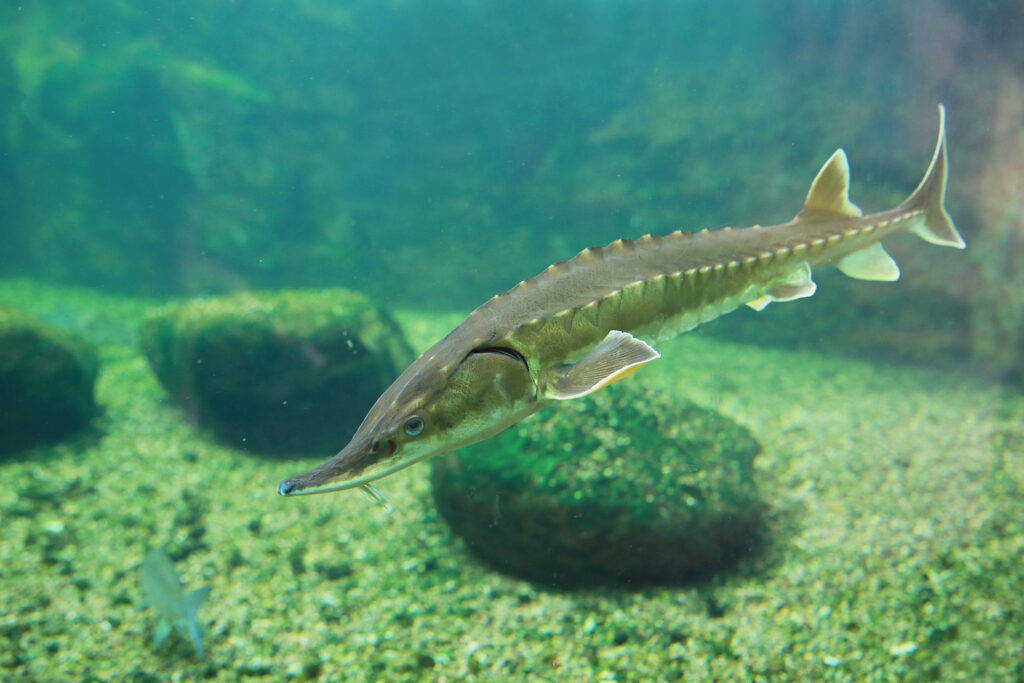
- Fisheries: Two of our fisheries scientists showed students a variety of field equipment—from shock backpacks for electrofishing (don’t worry—they weren’t on!) to radio telemetry tags for tracking fish through different waterways. Students got to touch the different sized radio tags and listen to the radio in action—it makes a distinct chirping sound when the tag is in range. By handling radio telemetry tags, students saw how we tag along on the adventure to understand a fish’s migration patterns and habitat needs.
This year’s visit reminded us that science is at its best when it is shared. Having our fisheries, wetlands, and marine teams all in one place highlighted the collaborative spirit that drives our work every day. We loved the curiosity and the tough questions the students brought to each station. One of the most important goals was to break the myth that science only happens in a textbook. By interacting with our staff, students saw a diverse range of career paths—from lab-based taxonomists to field-based fisheries technicians.
A huge thank you to Bedford High School for joining us; fostering this sense of stewardship in our local community is one of the most rewarding parts of what we do.