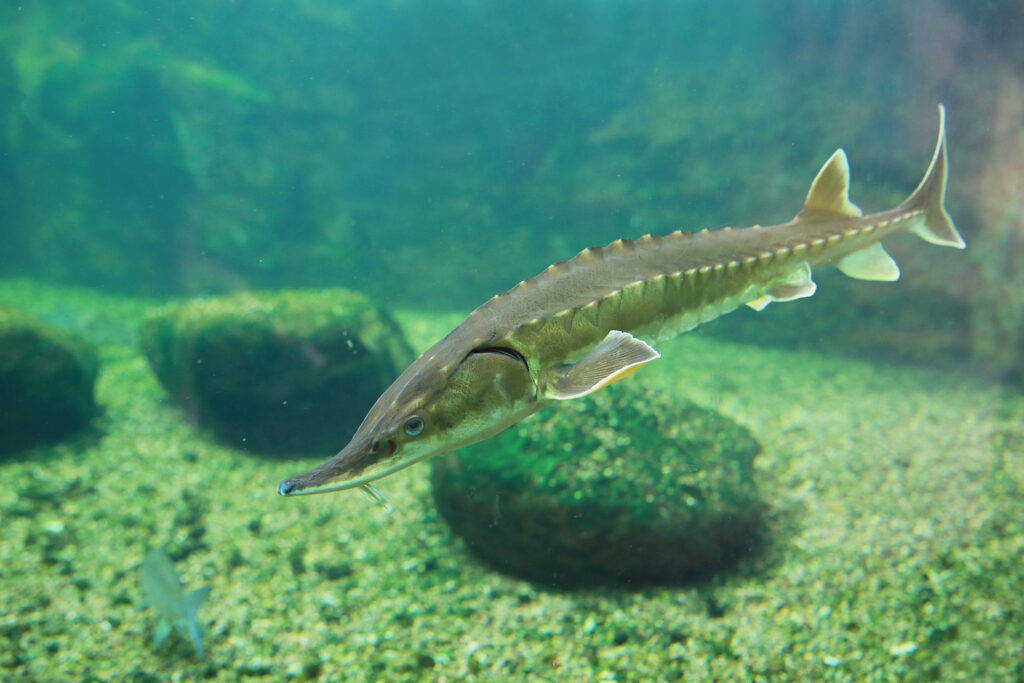
Returns of adult steelhead to West Coast rivers continue to be on the decline, but no-where is that decline and subsequent concern more evident than in Southern California streams. Here, “Southern California Steelhead” are listed as an endangered species by both the federal government and the state of California. In fact, a recent publication highlighted the plight of imperiled Southern California steelhead by summarizing known returns of adult steelhead over the past 24 years. The researchers found that on average only seven adult steelhead were found to return to their spawning grounds each year!
The Conception Coast of Southern California contains dozens of streams draining the mountains overlooking Santa Barbara (see map). Many of these streams are relatively pristine in their headwaters and support resident (not ocean-going) rainbow trout of anadromous heritage, but currently upstream migrant adult steelhead are blocked in most streams by impassable culverts underneath Highway (HW) 101, a major north-south freeway.
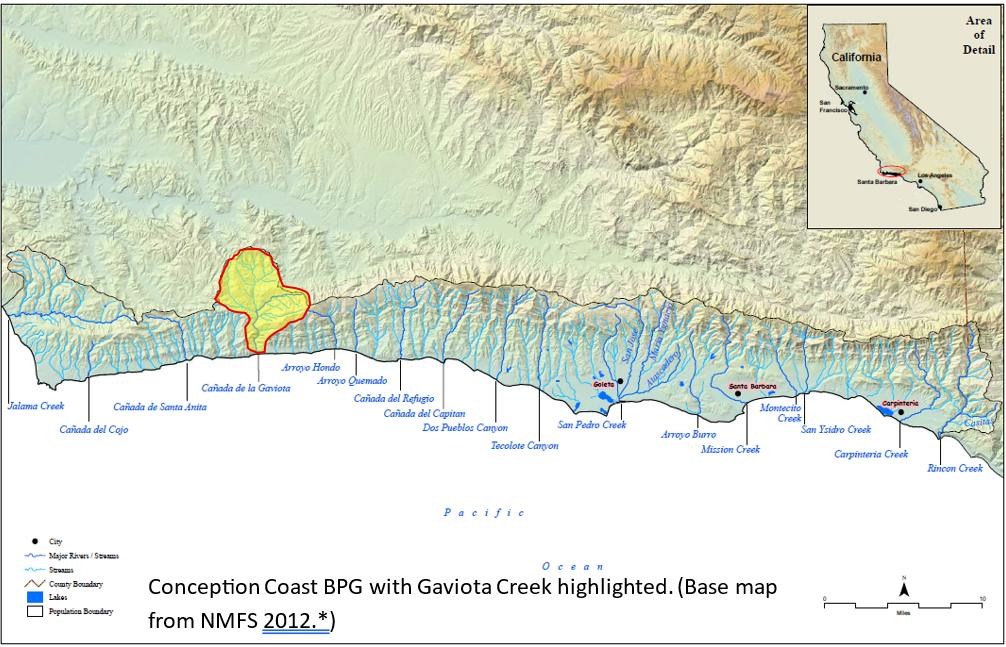
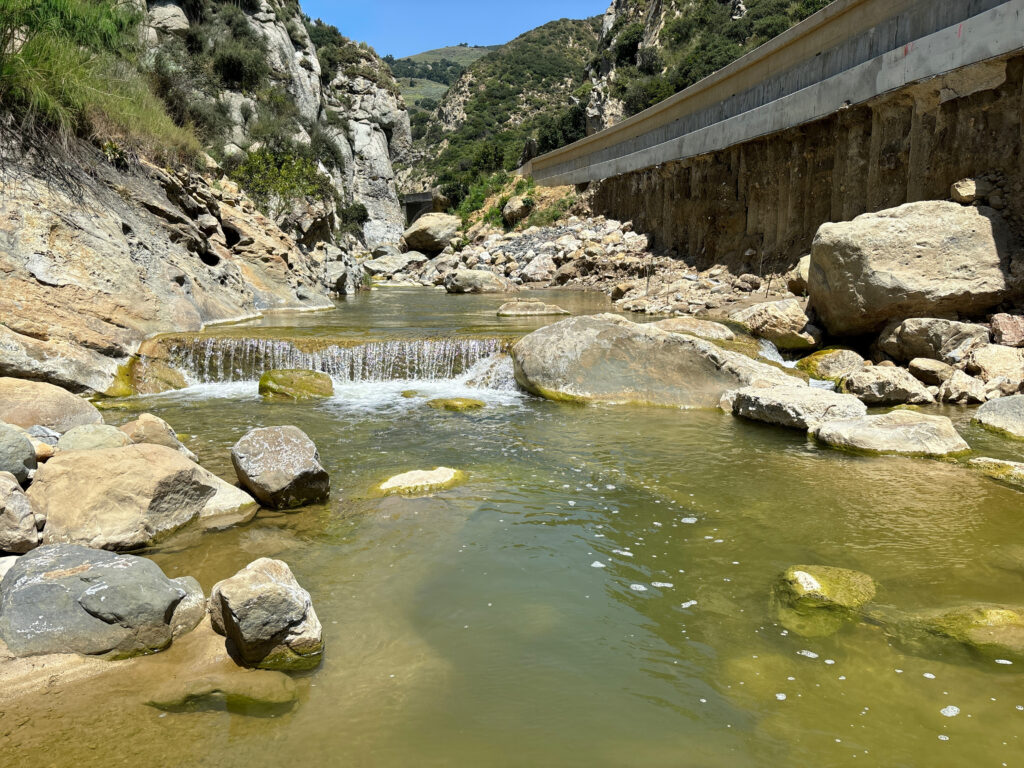
Gaviota Creek is an example of a Conception Coast stream possessing good water quality and excellent aquatic habitat in the headwater and tributary reaches. Unfortunately, HW 101 parallels Gaviota Creek for most of its length and has significantly altered the adjacent habitat. The most notable impacts due to the highway are a series of 12 grade-control structures that create vertical waterfalls ranging from one foot in height to over four feet, which often lack sufficient pool depths for fish to jump over the barriers (see barrier photo). These structures have long been identified as priority barriers for removal in order to aid in steelhead recovery efforts.
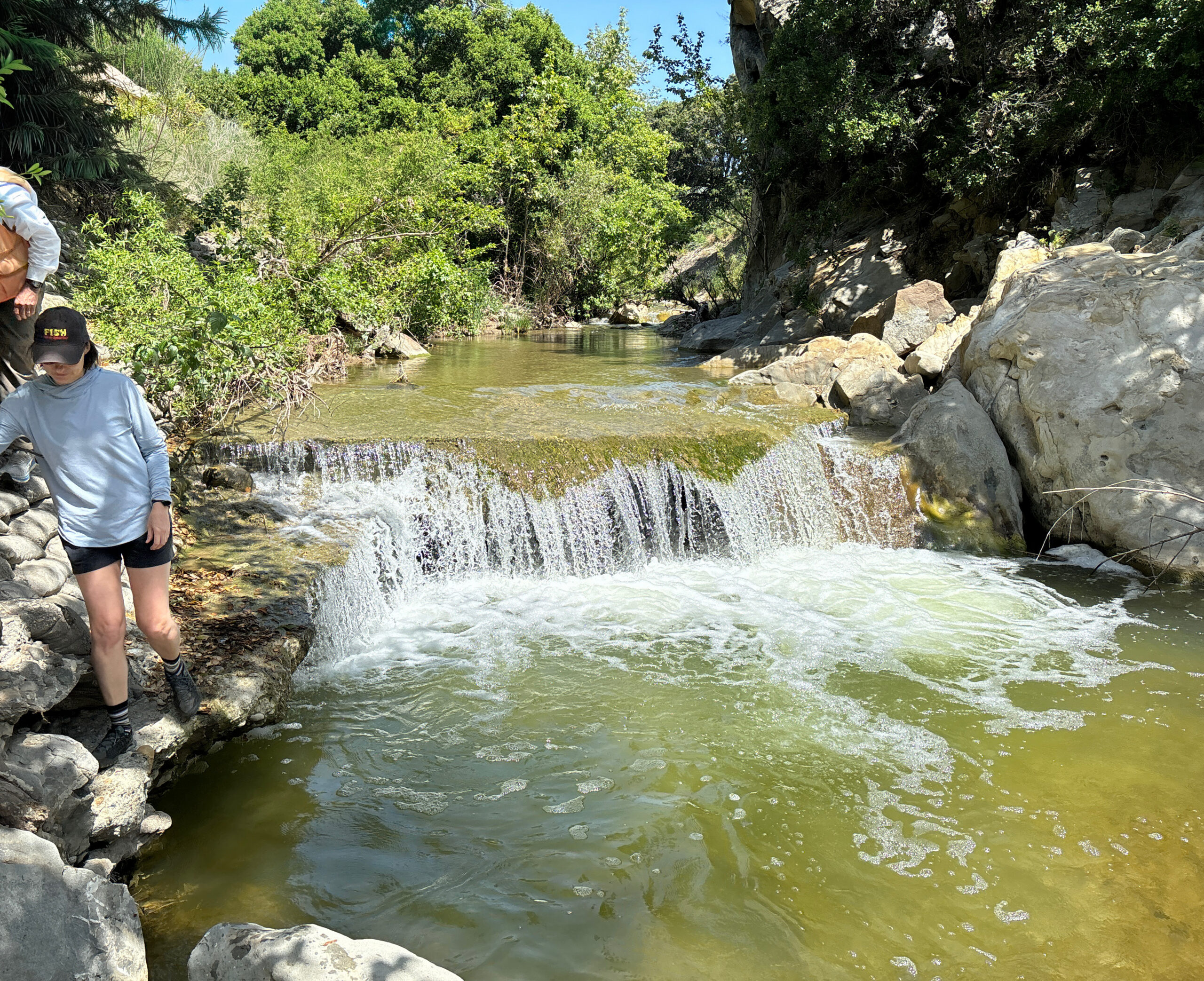
Normandeau was contracted by an environmental law firm and a watershed NGO to conduct two field surveys to observe and assess barrier characteristics at different flow levels, and to become familiar with the headwater and tributary reaches upstream of the barriers. Barriers were assessed in relation to steelhead life-history requirements, such as unimpeded upstream and downstream migration by adult and juvenile steelhead, spawning, and juvenile growth leading to smoltification (physiological adaptation for entering the ocean). Given the anadromous genes likely found in Gaviota’s stream-resident trout, we expect that remediation of the barriers will once again provide access to Gaviota’s high quality habitat for endangered steelhead. After all, if you un-build it, they will come!